Chapter Two

World War I

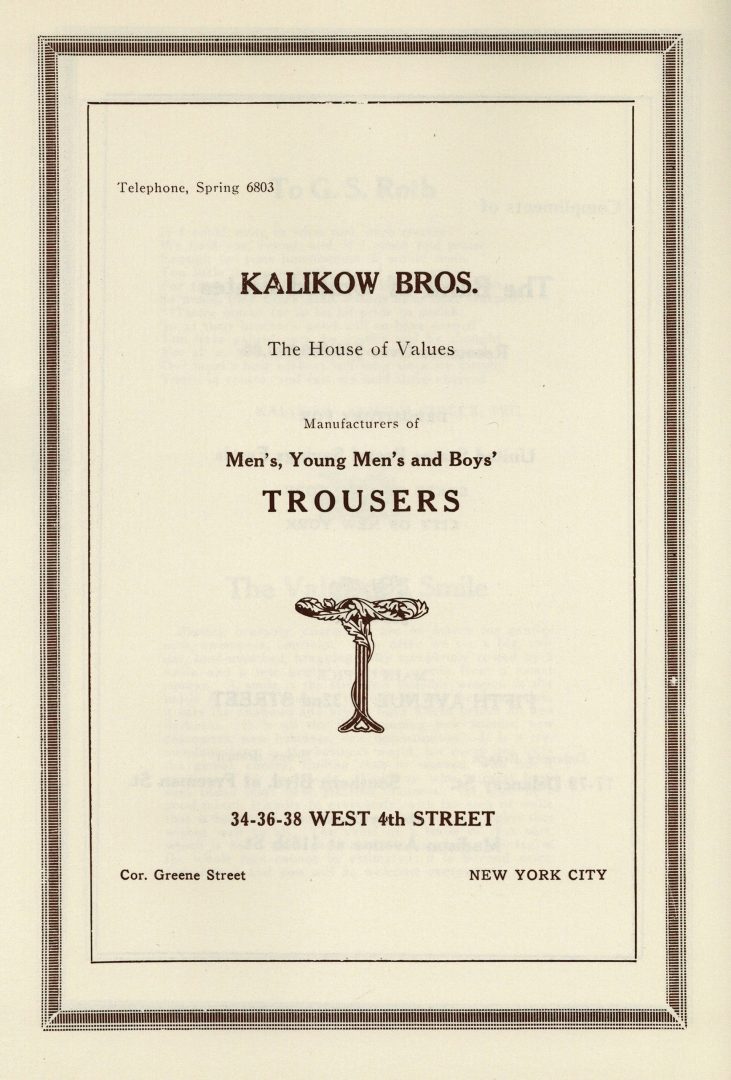
At the onset of the First World War, Joseph Kalikow was presented with a unique opportunity. Kalikow knew the metric system from his childhood, allowing him to easily manufacture and fill the demands for Russian and French military uniforms.

By capitalizing on his organizational knowledge and expertise in the industry, Joseph Kalikow made substantial profits. With the money that he earned, Kalikow began investing in real estate and became a partner on several projects.

Enthralled by the new industry, he moved from the clothing trade in the early 1920s, allowing other family members to buy out the business so that he could focus on investing in property development full time.

After spending countless hours observing and inspecting construction sites as an investor, Joseph Kalikow decided to take a more active role in the real estate business and started developing independently. In 1925, he founded the Kalikow Construction Corporation.
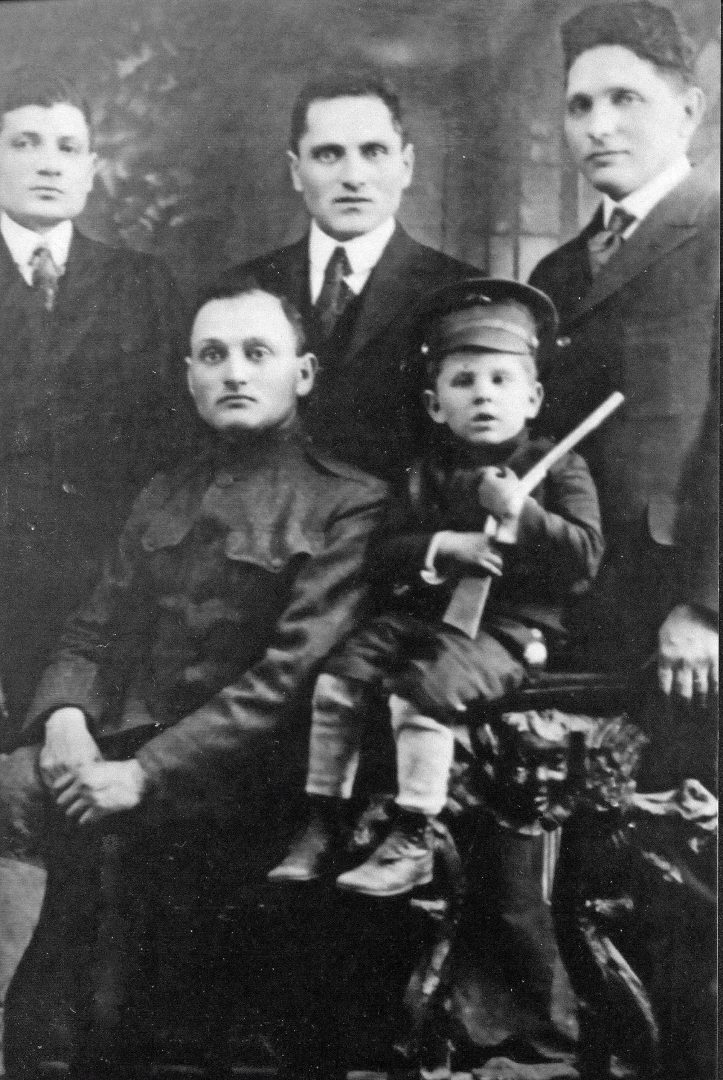
1917

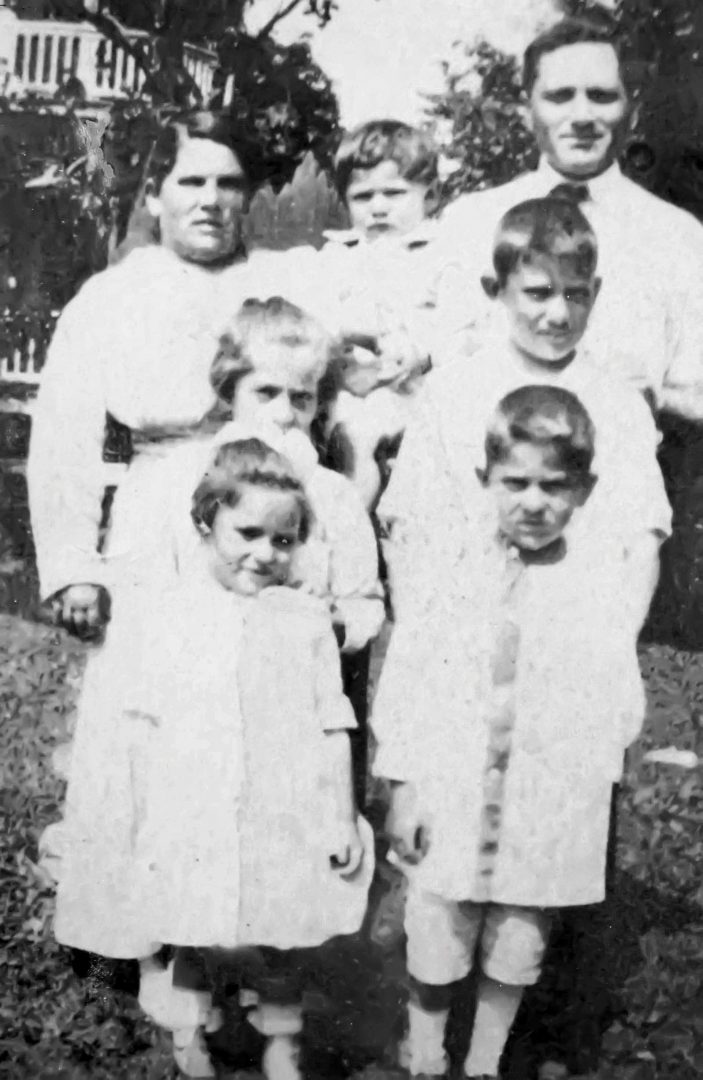
Top row, left to right: Max Kalikow, Joseph Kalikow, Joe Kalikow
Bottom row, left to right: Morris Kalikow, Nathan Kalikow

1918

Joseph and Anna Kalikow with their five children

1918

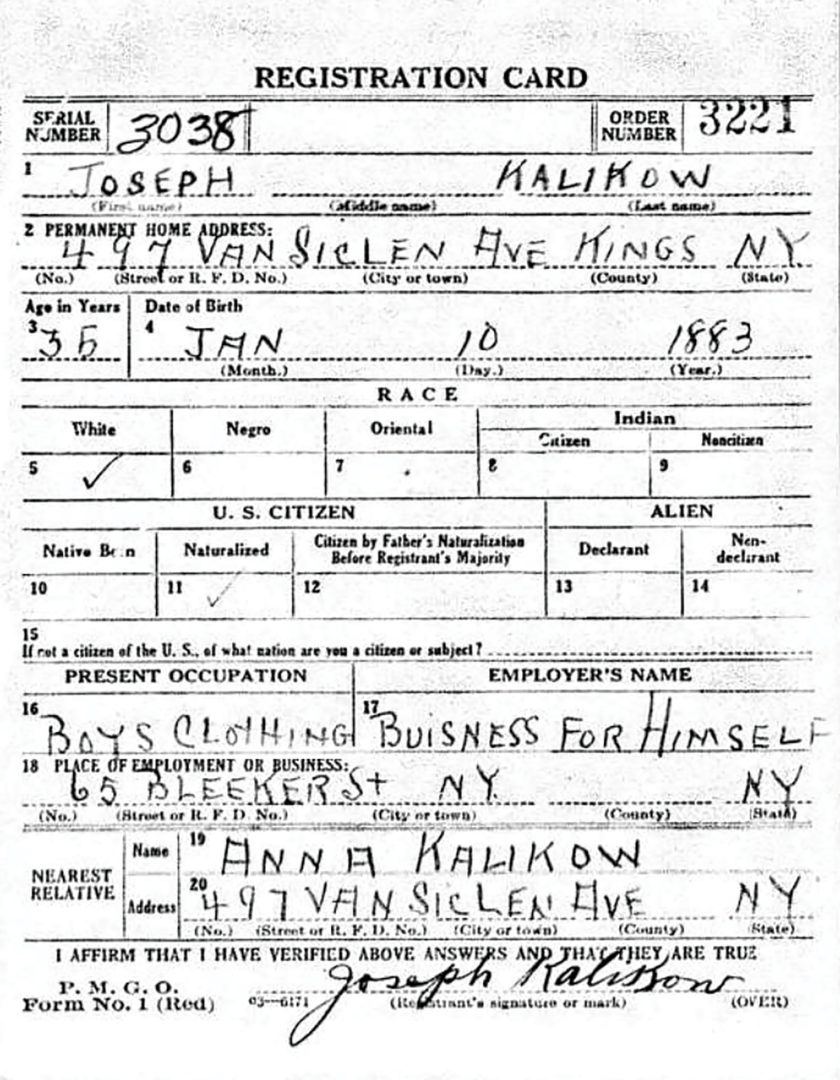
Joseph Kalikow’s registration card for World War I (September 1918). Following the passing of the Selective Service Act in 1917, the legislation was amended in August 1918 to expand the age range from 18-45. Joseph Kalikow was most likely deferred or exempt due to his five young children and wife at home, along with his occupation producing uniforms for French and Russian Allied soldiers, an essential role in the war effort.

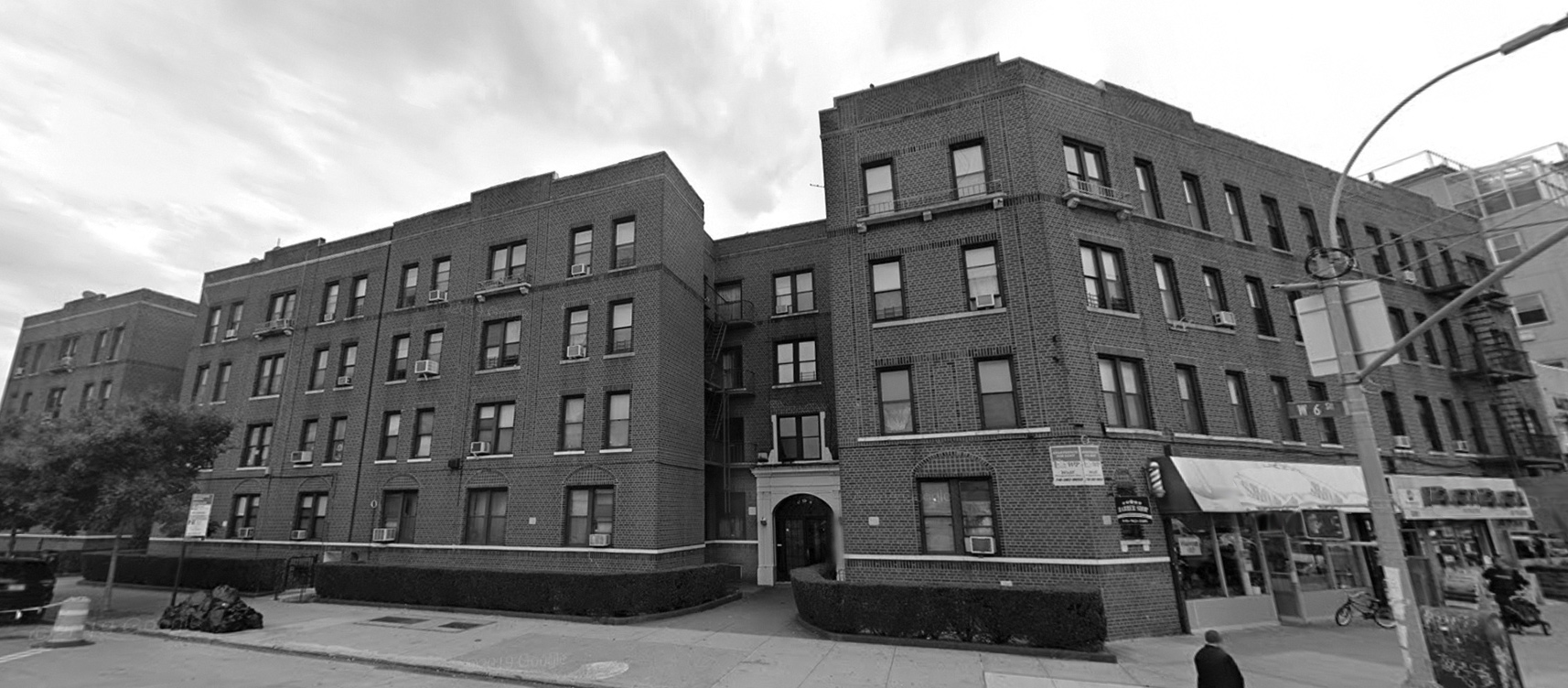
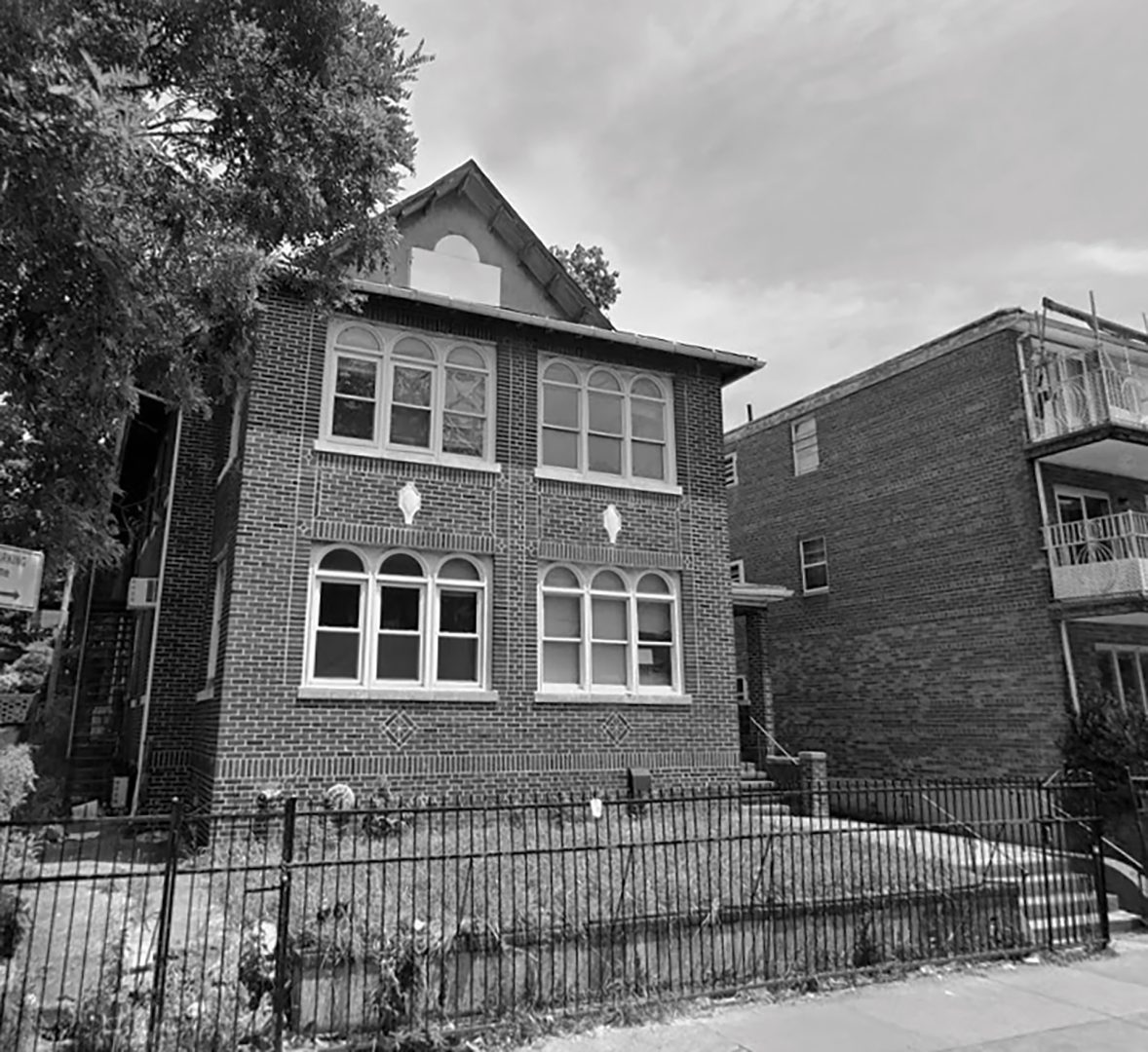
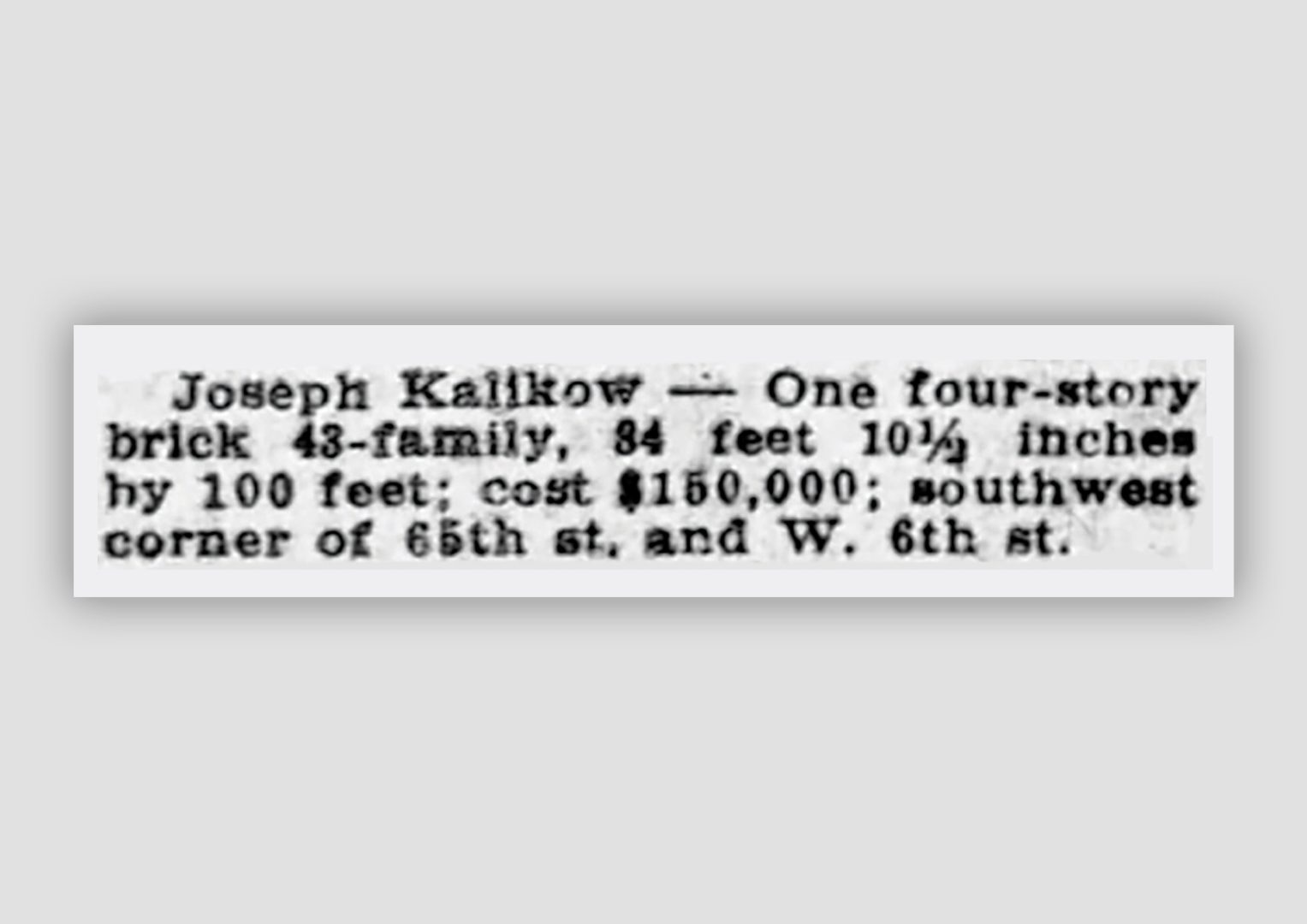
Joseph Kalikow began building in 1925 and completed his first project (1312 W 6th Street) in 1926: a four-story apartment building in Bensonhurst, Brooklyn, a neighborhood that was growing exponentially at the time.

Because most of Bensonhurst had been developed as single-family homes and there was limited space, developers had to find a way to accommodate the influx of families wishing to move there.

The Solution? Apartments.

Joseph Kalikow recognized the urbanization and development of Brooklyn and continued to build apartment buildings in the borough, positioning himself at the forefront of the real-estate industry there.

By the early 1930s, Kalikow had developed more than seven apartment buildings. It was during this time that he moved his family out of their tiny apartment on Van Siclen Ave, and into a large home located at 1415 55th Street in Borough Park, Brooklyn.

Kalikow’s professional aspirations, however, were halted by the Great Depression.

1926

Joseph Kalikow completes his first project in 1926, 1312 W 6th St., a four-story apartment building in Bensonhurst, Brooklyn.

1930s

After spending countless hours observing and inspecting construction sites as an investor, Joseph Kalikow decided to take a more active role in the real estate business and started developing independently. In 1925, he founded the Kalikow Construction Corporation.
1926

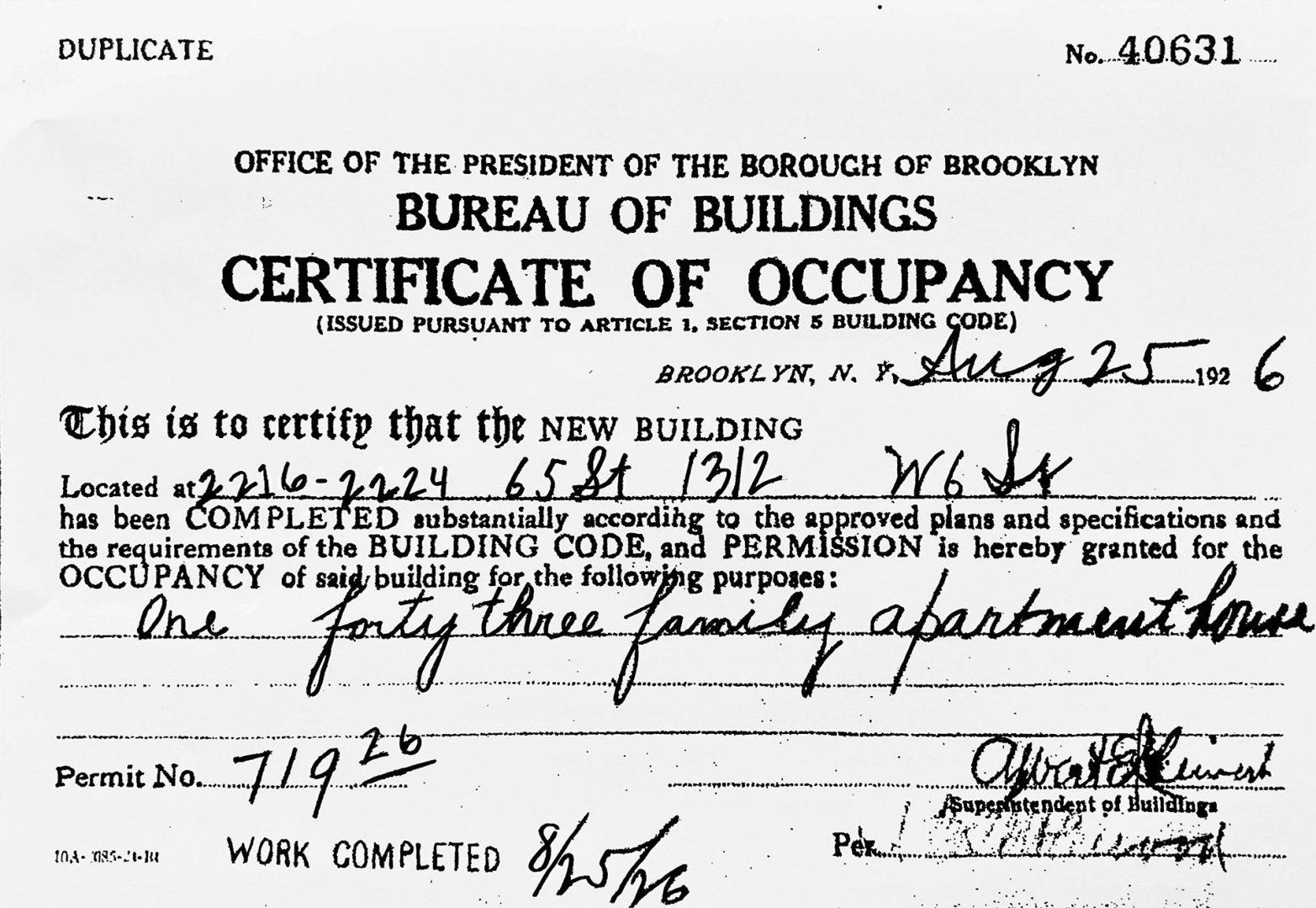
According to the NYC Department of Buildings, the new building permit for 1312 W 6th Street was originally filed on November 10, 1925. The certificate of occupancy was obtained by Joseph Kalikow on August 25, 1926, once the building was complete.

1925

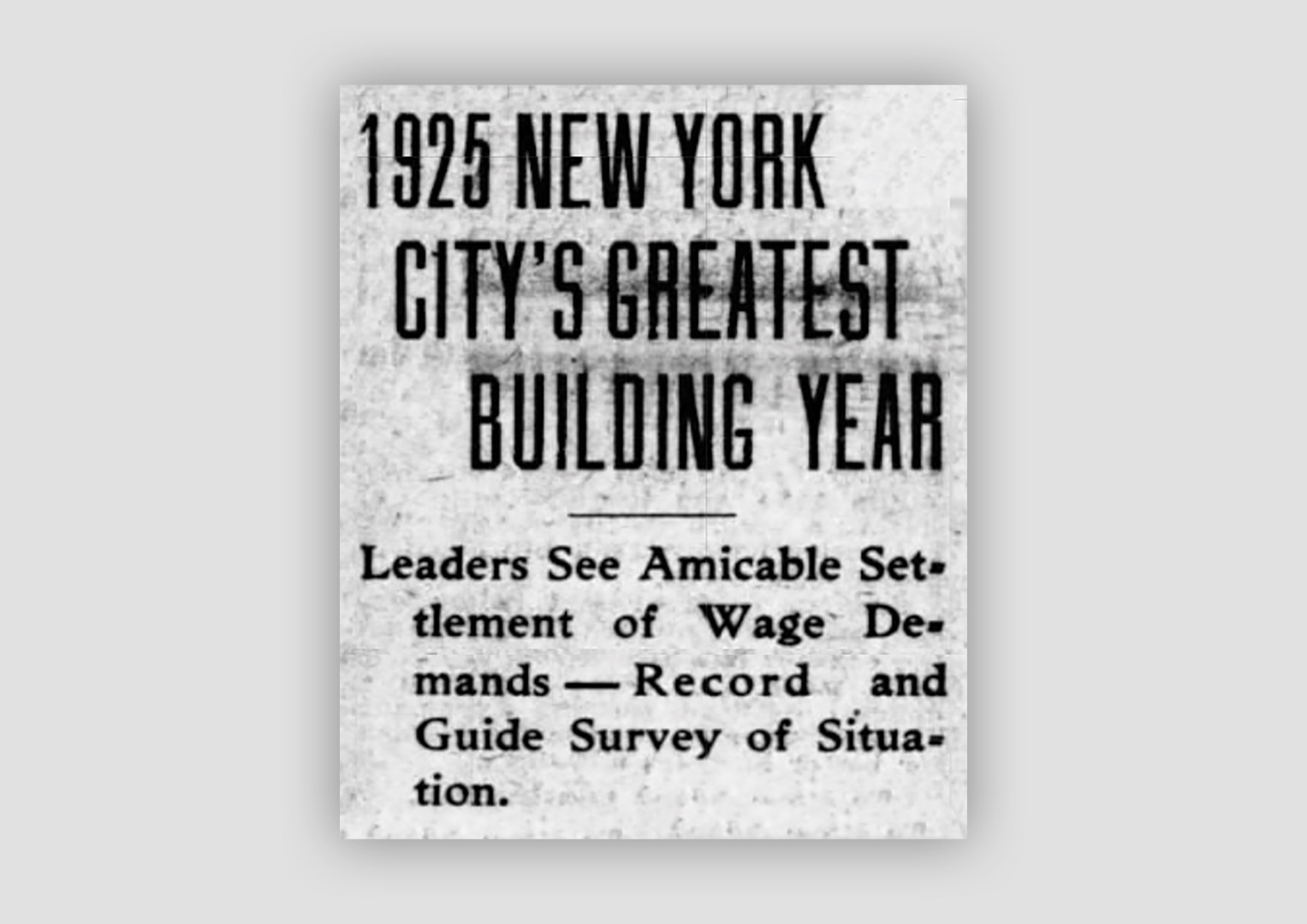
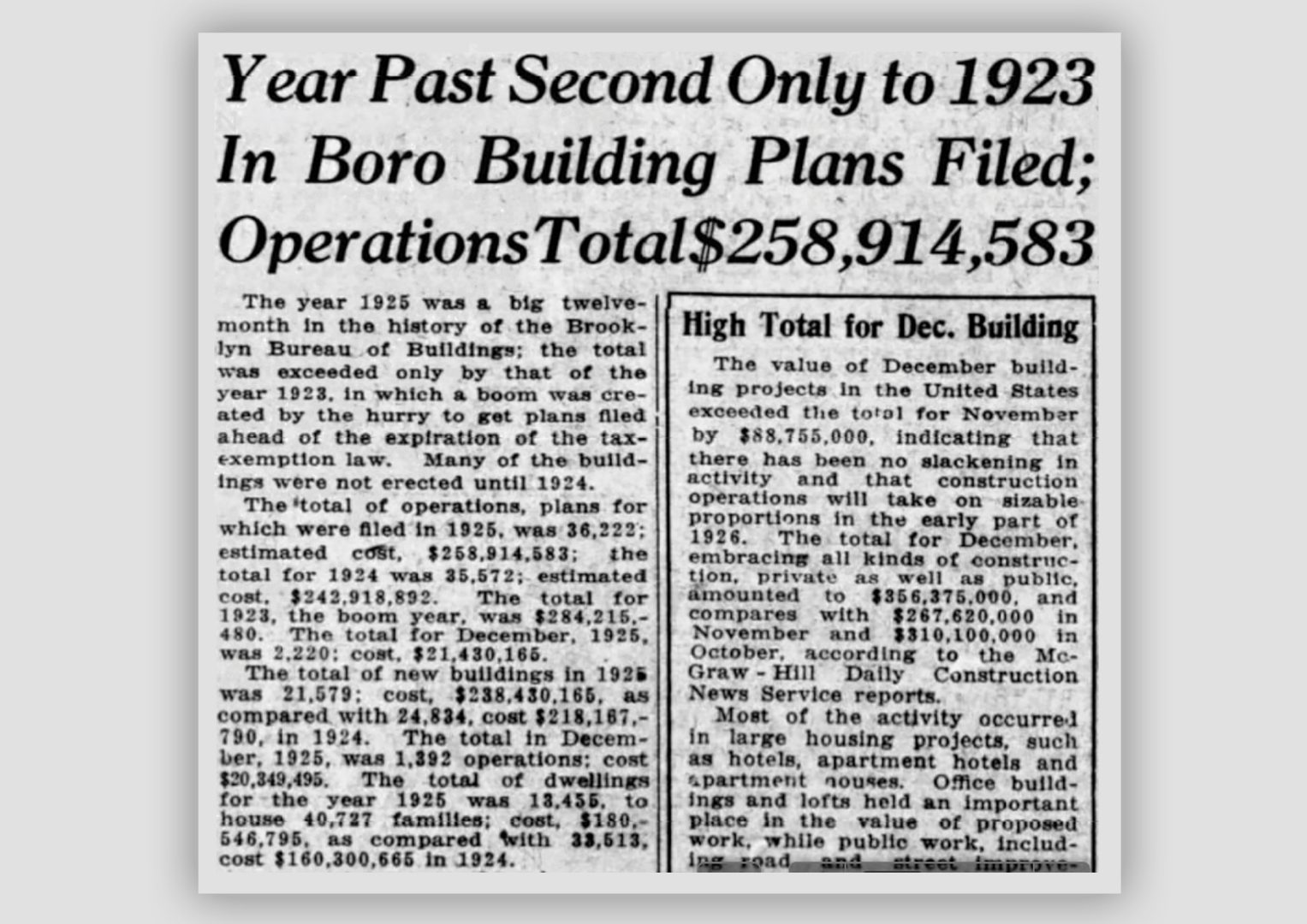
A record-breaking year in the history of the Department of Buildings, 1925 saw Joseph Kalikow at the forefront of the increasing real estate development in Brooklyn (The Brooklyn Daily Eagle:, January 3, 1926).

1925

A record-breaking year in the history of the Department of Buildings, 1925 saw Joseph Kalikow at the forefront of the increasing real estate development in Brooklyn (The Brooklyn Daily Eagle:, January 3, 1926).

1925

A record-breaking year in the history of the Department of Buildings, 1925 saw Joseph Kalikow at the forefront of the increasing real estate development in Brooklyn (The Brooklyn Daily Eagle:, January 3, 1926).

The Kalikow Family Circle

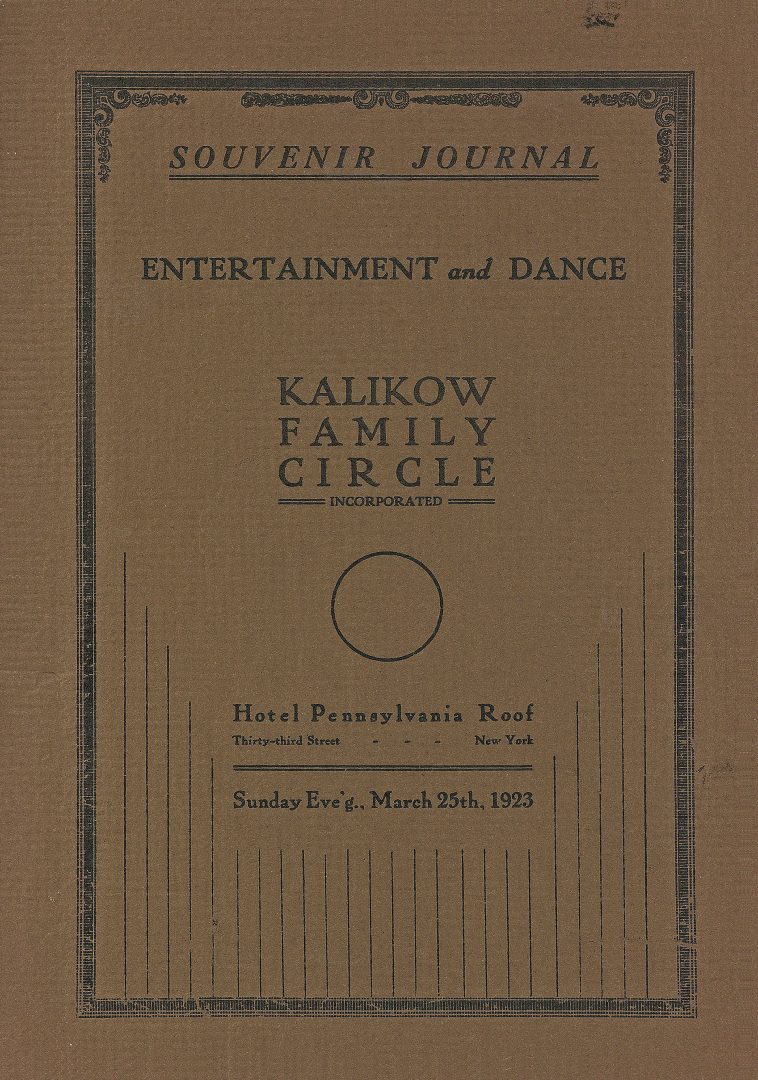
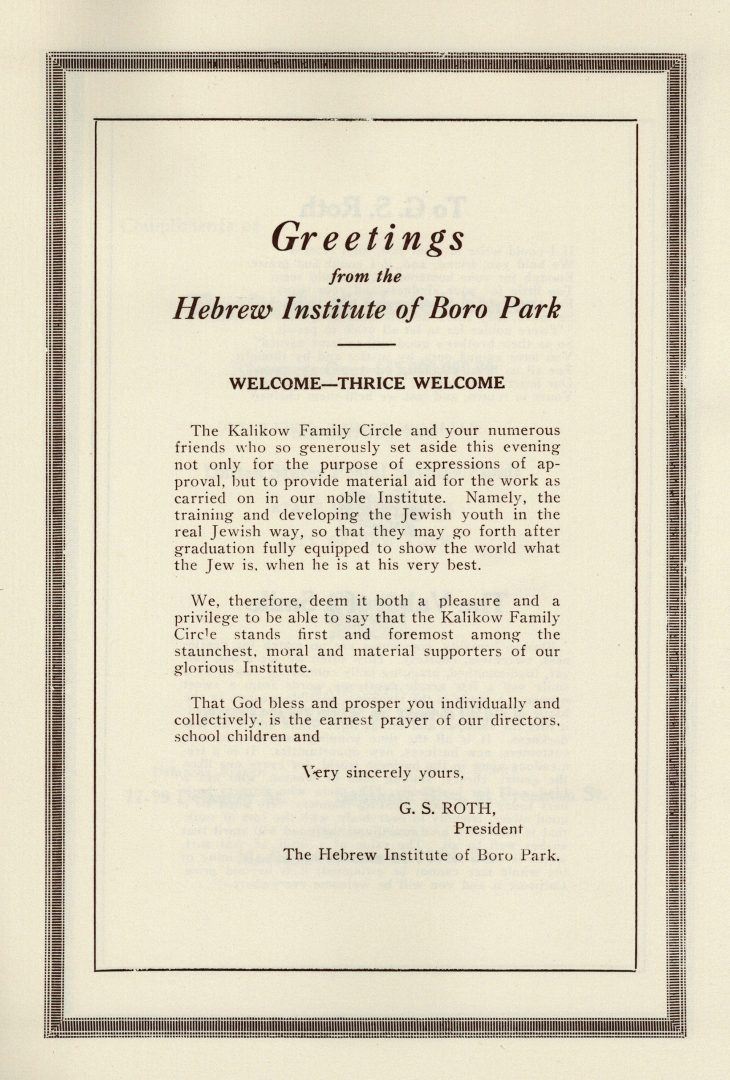
In 1921, the Kalikow family founded an organization called the Kalikow Family Circle in Borough Park, Brooklyn. The Circle was organized for the purpose of bringing together and strengthening ties among the Jewish families in the community. Galas, such as the one advertised in the below image, were held as a way to celebrate the Circle and promote philanthropy. The proceeds from the events were donated to local Jewish organizations including the Hebrew Institute of Boro Park. Joseph Kalikow served on the Kalikow Family Circle Board of Trustees along with his brothers and cousins.

1923

Pictured is the cover of a 1923 Kalikow Family Circle souvenir journal, which was given out to guests at one of the organization’s many events.

1923

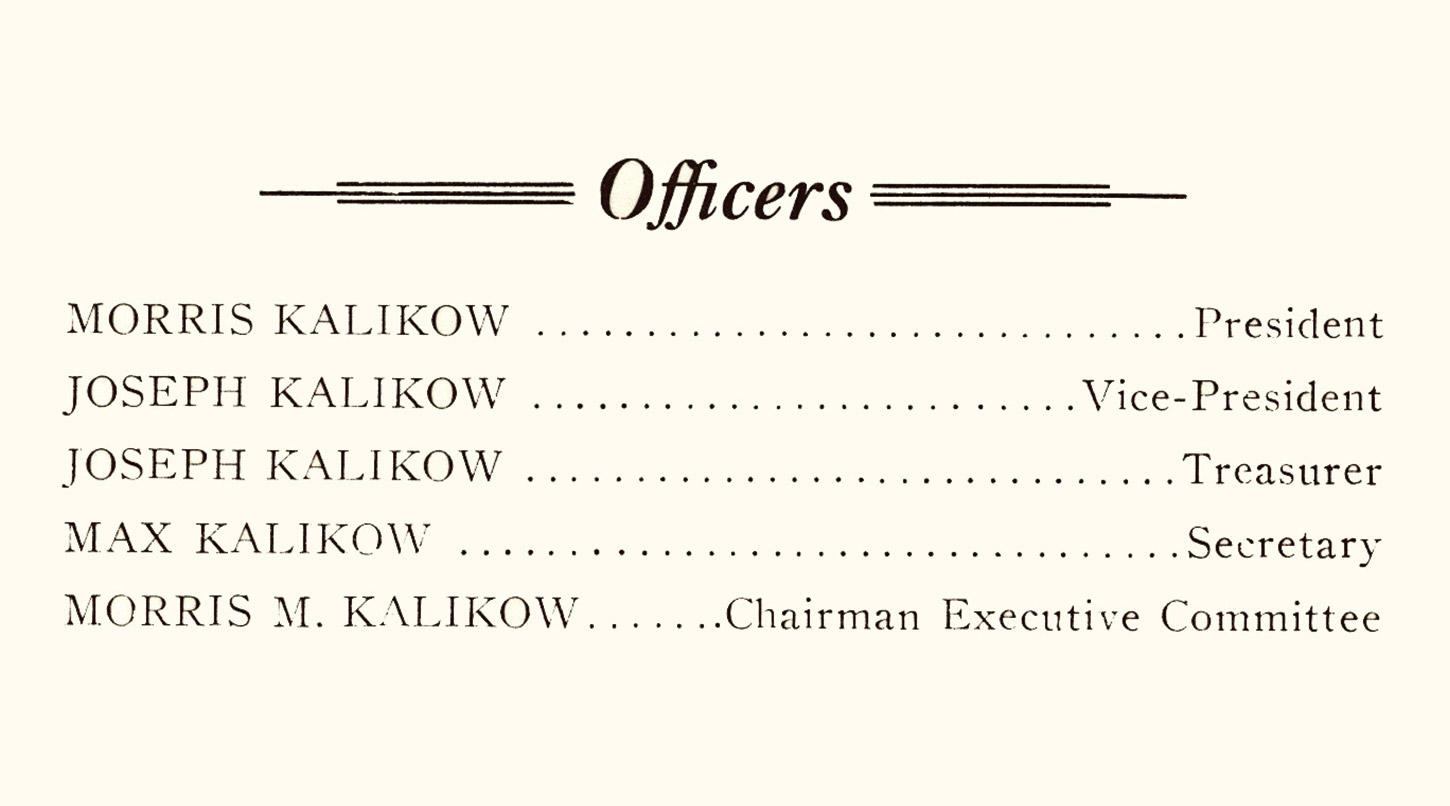
Officers listing from the 1923 Kalikow Family Circle souvenir journal.

1922

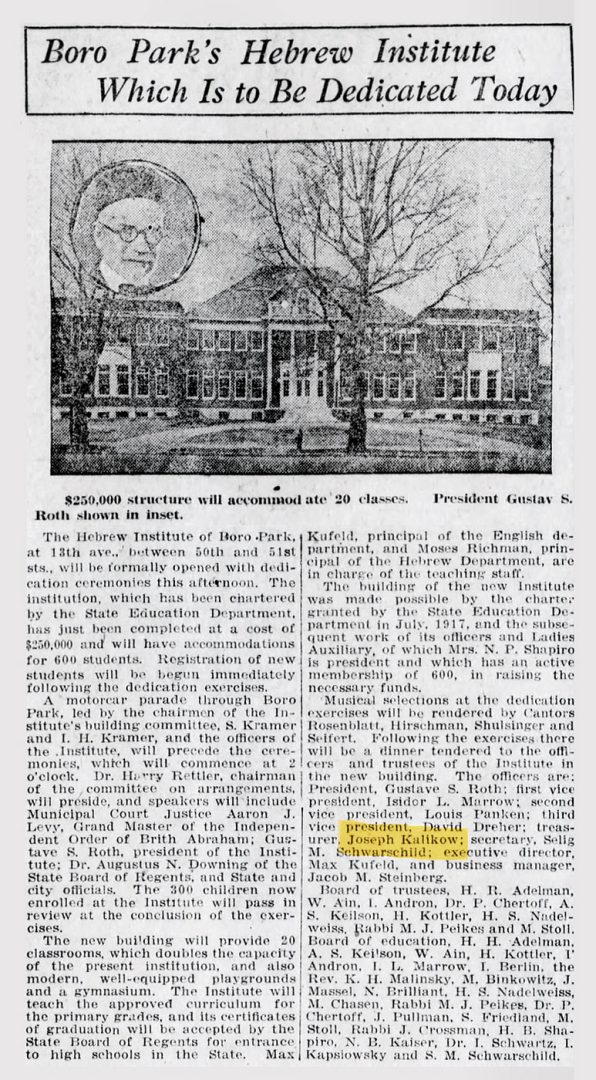
In addition to the Kalikow Family Circle, Joseph Kalikow was also heavily involved in the Hebrew Institute of Boro Park, where he served as treasurer (The Brooklyn Daily Eagle: December 3, 1922).

1923

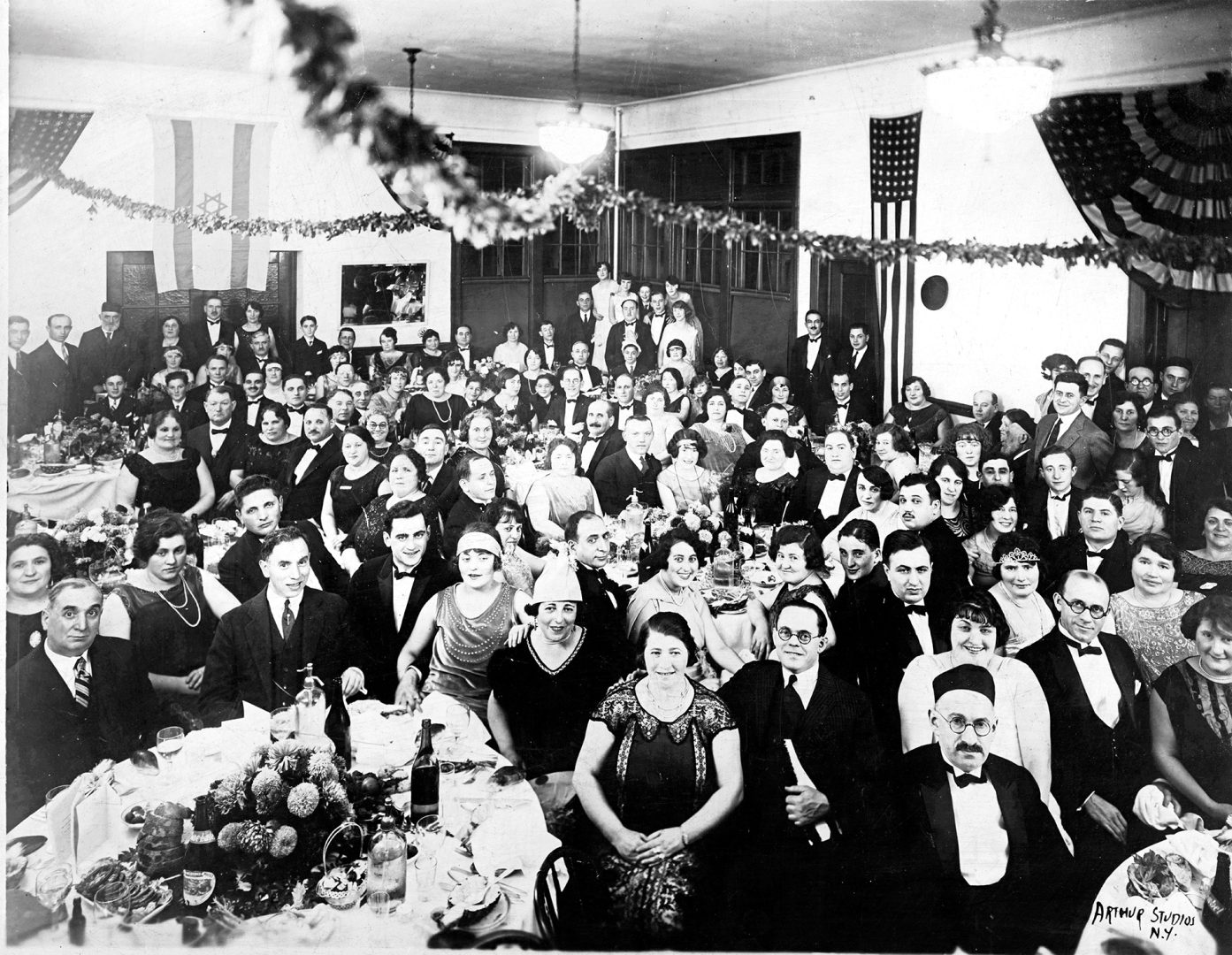
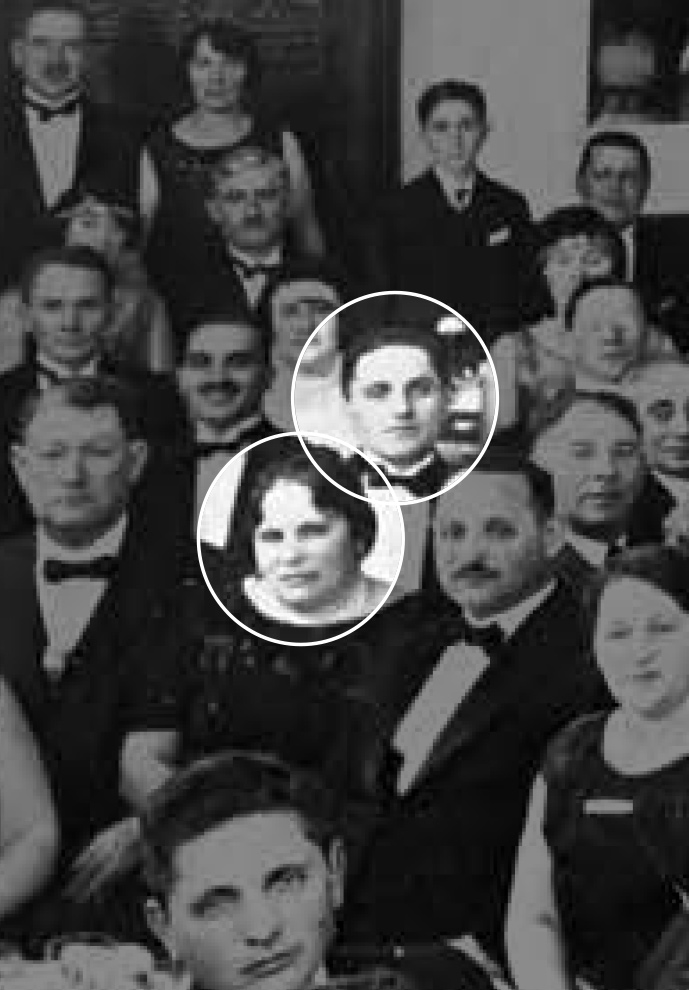
A Kalikow Family Circle gathering: Joseph Kalikow and his wife, Anna, can be seen sitting in the back left corner of the room.