The property Kalikow bought in 1977 was owned by real estate investor Sol Goodman. Goodman originally planned to demolish the three townhouses on the site, which dated back to 1899, to make way for a 25-story luxury apartment building.
Goldman’s plans were met with strong opposition from the community because they were fighting to get the site designated a historic district by the New York City Landmarks Preservation Commission. The Commission denied the case, and Goldman demolished two of the townhouses. Instead of moving forward, however, financial troubles forced Goldman to sell the empty lot along with the remaining townhouse to real estate developer Donald Zucker.
After Zucker acquired the property, he met for lunch with his good friend Peter Kalikow at the City Athletic Club. On the way out of the restaurant, Zucker told Kalikow about the new site and asked if he would be interested in buying it.
Kalikow was interested and proceeded to purchase the lot from Zucker in 1977.
He went forward with an as-of-right building under the terms of the Fifth Avenue Special Zoning District, which stipulated that Kalikow contribute $140,000 to the city to assist park maintenance in the district in return for a sixteen-unit density bonus.
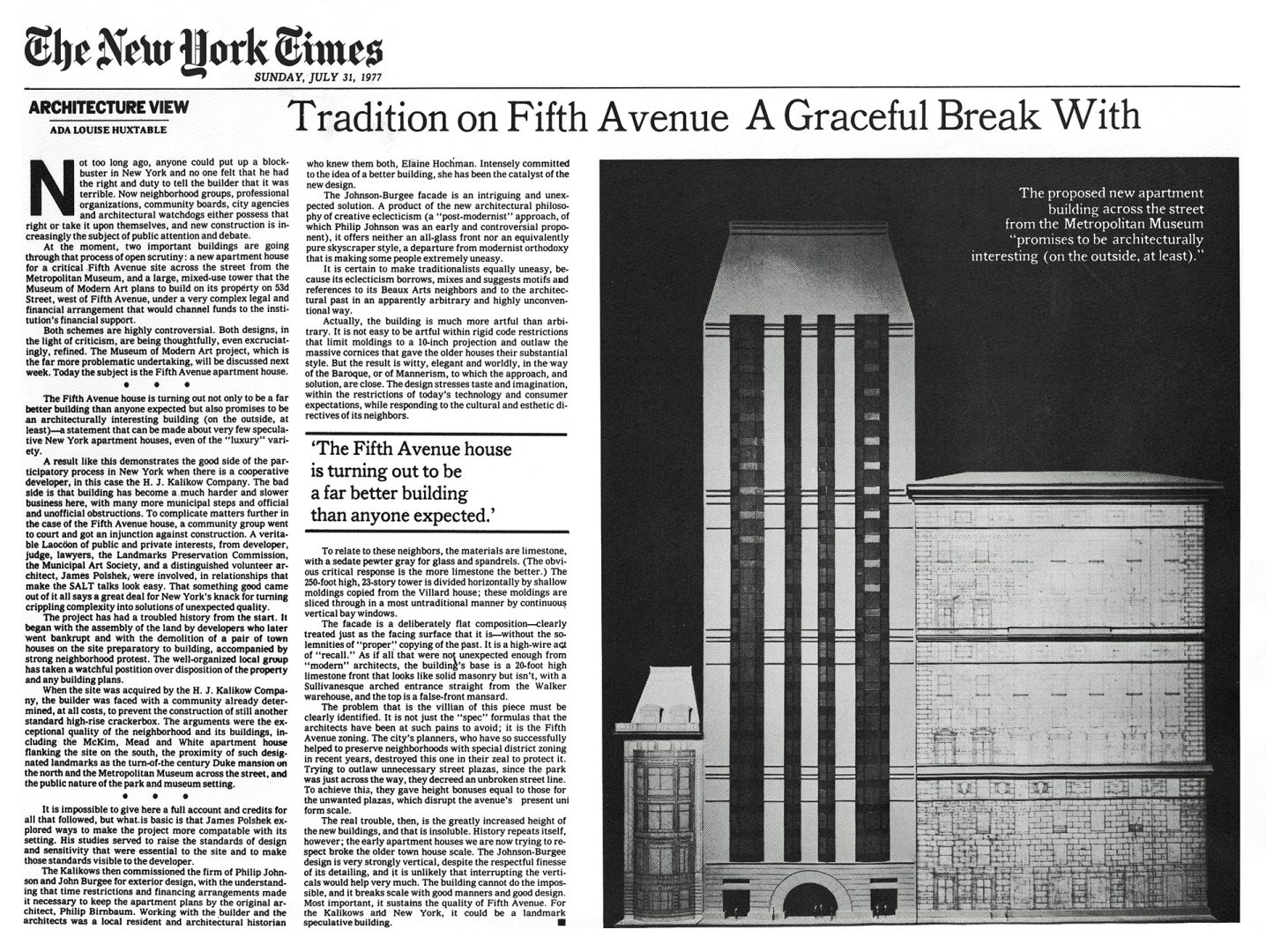
Aware of the backlash Goldman faced, Kalikow announced that he would make the new building compatible with the design of the surrounding buildings on Fifth Avenue. Following his purchase of the property, the city held another Landmarks Commission public hearing regarding the site on March 8, 1977.
Since demolition had already begun on the last townhouse before the public hearing, which aimed to stop the wreckage, the hearing resulted in a joint decision for Kalikow, a neighborhood group, and the Landmark Preservation Commission to review the architectural plans for the exterior of the new building together. Kalikow voluntarily agreed to the decision and signed a consensual contract with the other parties ensuring that the final structure would harmonize with the surrounding architecture.
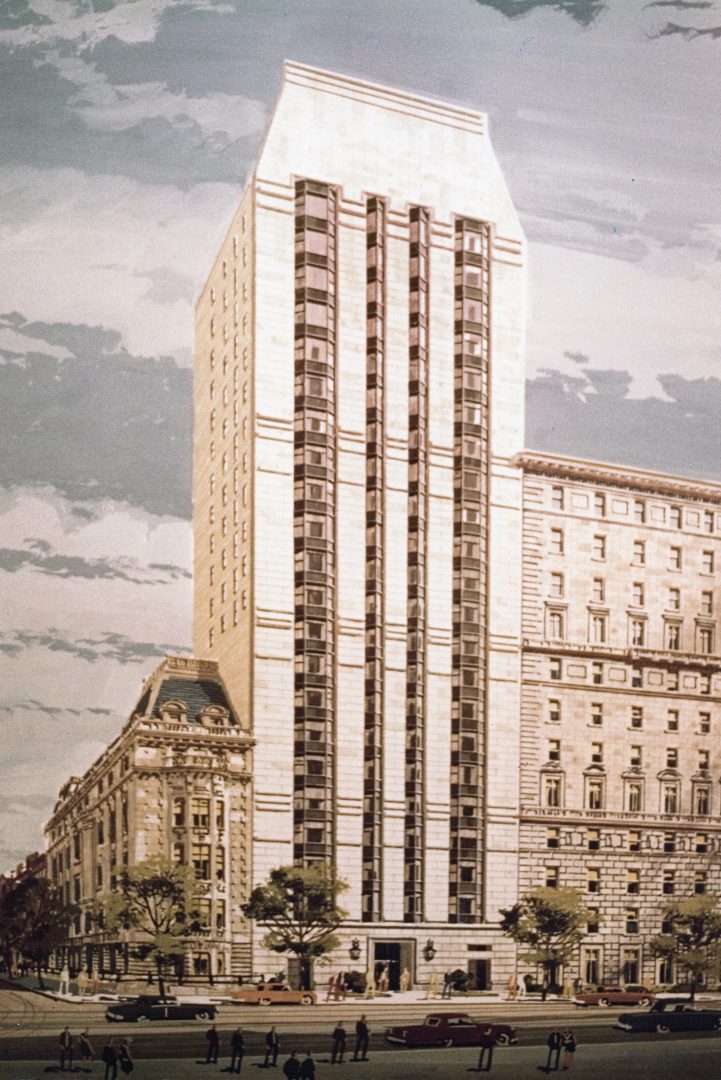
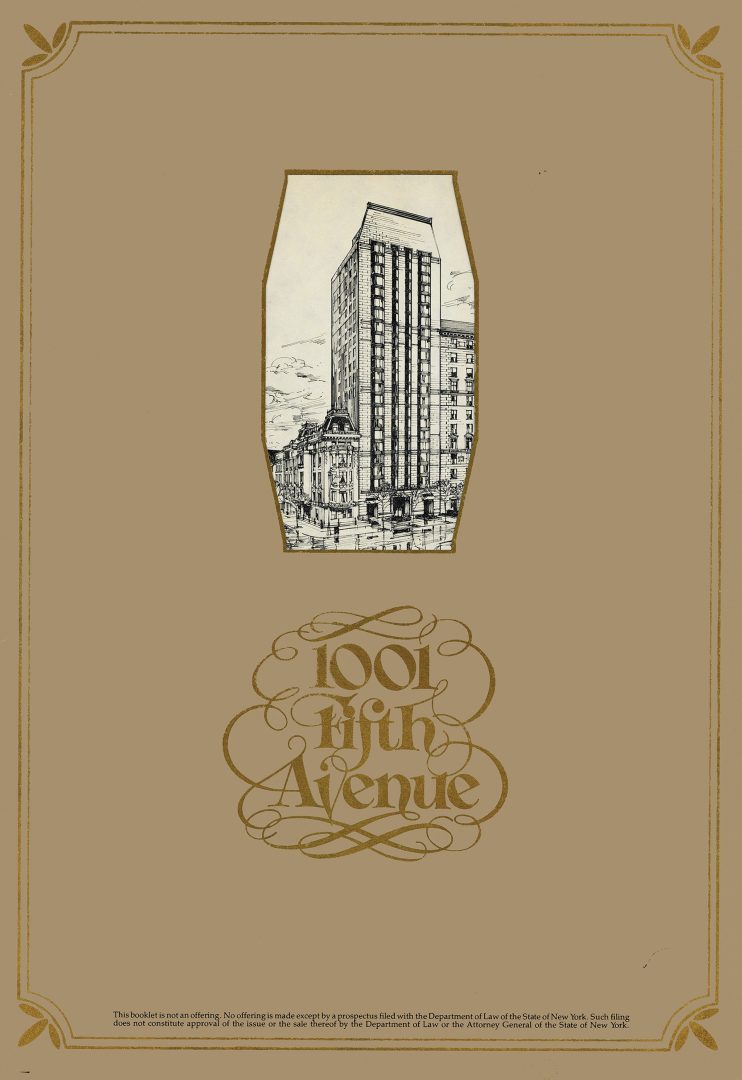
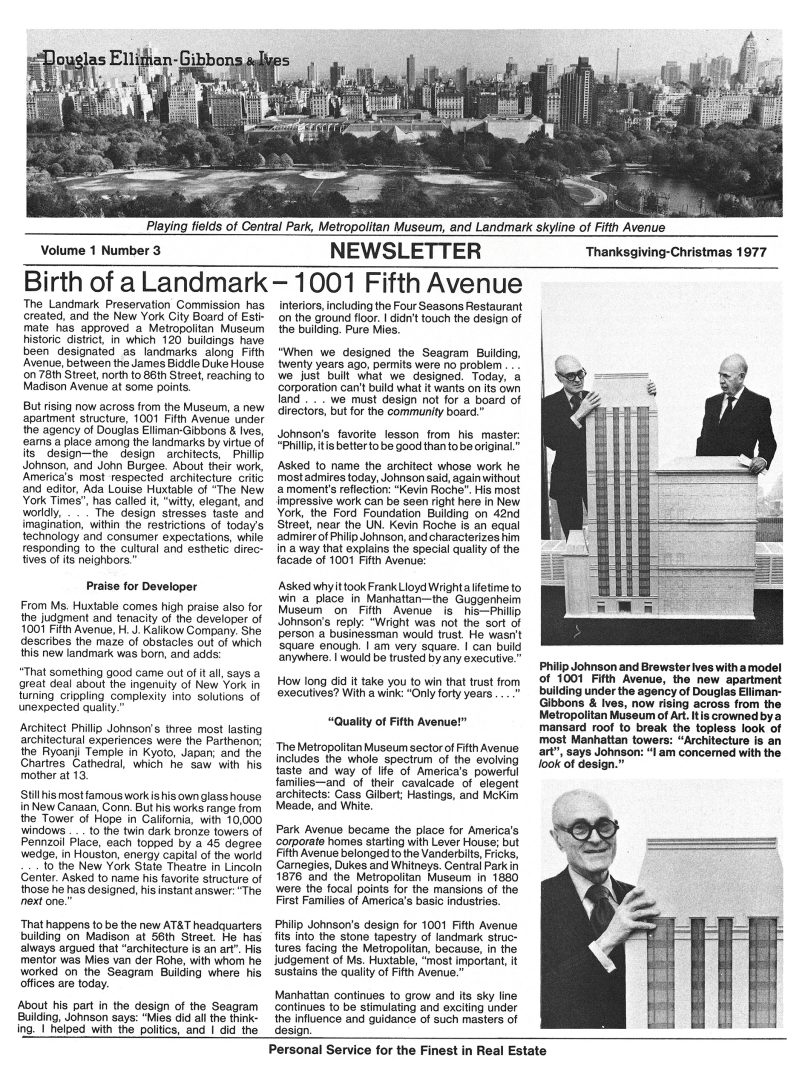
After the community group picked architect James Stewart Polshek to present alternate plans that were ultimately rejected, Kalikow brought on world-famous architects Philip Johnson and John Burgee to design the facade of 1001 Fifth Avenue. The initially designated architect on the project, Philip Birnbaum, continued his designs for the interior.
The Metropolitan Museum Historic District, including Fifth Avenue and side streets between 78th and 86th Streets, was approved on September 20, 1977, and ratified by the Board of Estimate on November 3, 1977.
Completed in 1978, 1001 Fifth Avenue received high praise for embracing traditional architecture while adding something new and exciting to the design. The structure served as a quintessential example of how to develop large-scale new construction projects in historic areas.
Peter and Mary moved into the apartment building after it was completed and began to raise their family there. The revenue generated by 1001 Fifth Avenue would enable Peter to advance with his next endeavor.